Walk into almost any toy store and the layout tells a story before a single product is picked up: pink aisles of dolls and domestic sets on one side, blue shelves of construction kits and vehicles on the other. Most adults accept this division as a reflection of what children naturally want. But a growing body of developmental research suggests something more uncomfortable — that children's toy preferences are less a window into innate difference and more a mirror of the social world adults have already built around them. Understanding how gender stereotypes shape children's play isn't just an academic exercise. It has real consequences for how young minds develop skills they'll rely on for the rest of their lives.
How Early Does Gender-Typed Play Begin?
The sorting starts surprisingly early. Studies show children as young as 2–3 years old begin to sort toys by perceived gender category, well before they have fully formed gender identity. This is a striking finding. At an age when children are still mastering basic language and have only a fragile, often inconsistent understanding of what gender even is, they are already applying social rules to objects.
This tells us something important: the preference isn't emerging from a well-developed sense of self. It's emerging from observation and imitation. Toddlers are extraordinarily sensitive to social cues — they watch what adults approve of, what older children reach for, and what the world signals is "for them." Toy categorization appears to be one of the earliest ways children demonstrate that they've absorbed social norms, not one of the ways they express an inner biological truth.

As an Amazon Associate, I earn from qualifying purchases.
The Social Learning Mechanism: How Norms Get Installed
Developmental psychologists describe several interlocking processes through which gender-typed play preferences take hold. None of them require a biological switch to flip.
Modeling and Observation
Children learn what is socially expected by watching people around them. When fathers consistently engage in construction play and mothers consistently engage in domestic or nurturing play, children treat this as data about gender roles. They then apply those observed rules to unfamiliar situations, including choosing toys.
Reinforcement from Adults
Research consistently shows that adults — even well-meaning ones — respond differently to children depending on the toy they choose. Boys playing with dolls and girls picking up toy tools often receive subtler signals of discomfort: a raised eyebrow, a redirect, a purchase decision that steers them elsewhere. These responses don't need to be explicit to be effective. Young children are exquisitely tuned to adult approval.
Peer Pressure and Social Identity
Once children enter group settings — nurseries, playgroups, preschools — peer influence accelerates rapidly. Gender becomes a key organizing category among children themselves. Playing with a "wrong" toy can attract teasing or social exclusion, which is among the most powerful behavioral deterrents available to a young child. This peer enforcement means that even children in relatively gender-neutral home environments encounter strong conformity pressure the moment they move into social play settings.
As an Amazon Associate, we earn from qualifying purchases.
Media and Marketing
Children's media compounds all of this. Packaging, advertising, and the visual language of children's entertainment consistently signal which gender a product is "for." Color coding, character selection, and the activities depicted on packaging prime children toward or away from certain categories before they've even handled the toy.
The Cognitive Costs: What Children Miss When Play Is Segregated
If toy preferences were merely a matter of taste, the stakes would be low. But different types of play develop different cognitive capacities, and when children are steered away from certain categories, they lose access to those developmental benefits.
Spatial Reasoning and the Construction Gap
Spatial reasoning skills — strongly linked to STEM success — are consistently higher in children given regular access to construction and building toys, which are disproportionately marketed to boys. Spatial reasoning — the ability to mentally manipulate objects, understand three-dimensional relationships, and think in terms of structure and form — is one of the strongest individual predictors of later performance in mathematics, engineering, and the physical sciences.
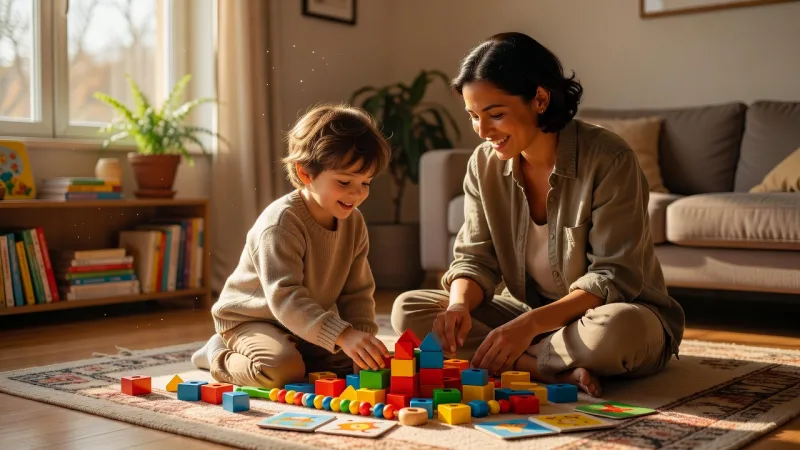
When blocks and bricks, engineering sets, and construction materials are culturally coded as "for boys," girls who internalize that message get fewer hours of the kind of hands-on play that builds these skills. The gap that appears in spatial testing between boys and girls in later childhood and adolescence doesn't reflect fixed biological difference — it tracks closely with the difference in play history.
What Girls Are Directed Toward — and What That Develops
It's worth being precise here: the toys disproportionately marketed to girls are not without developmental value. Doll play, nurturing scenarios, and social role-play genuinely develop language, emotional intelligence, and theory of mind — the ability to understand that other people have thoughts and feelings different from your own. These are real and important capacities.
The problem isn't that these toys exist or that children enjoy them. The problem is the either/or framing — the implicit message that construction and spatial play belong to one gender and social-emotional play belongs to the other. Both sets of skills matter for every child's development.
Narrowed Risk-Taking and Persistence
Construction and mechanical play also involves a particular kind of learning: building something, having it fail, and rebuilding. This trial-and-error cycle is foundational to problem-solving confidence. When children are systematically directed away from this mode of play, they miss not just the spatial practice but the experience of productive failure in a low-stakes environment.
What Happens When the Environment Changes?
Some of the most compelling evidence that preferences are socially constructed comes from intervention studies: when you change the environment, preferences shift. Children who are introduced to construction play in a neutral, encouraging setting — where no social signal marks it as "not for them" — engage with it readily and show measurable gains in spatial reasoning within relatively short periods.
Similarly, boys introduced to imaginative social play in supportive settings show gains in the very language and social cognition skills that are often considered their relative weakness. The brain doesn't come pre-divided along gender lines for play. It responds to what it's given.
Setting Up Play Environments That Support All Children
For parents, educators, and anyone who designs spaces where children play, the practical implications are fairly direct.
Offer Before Inferring
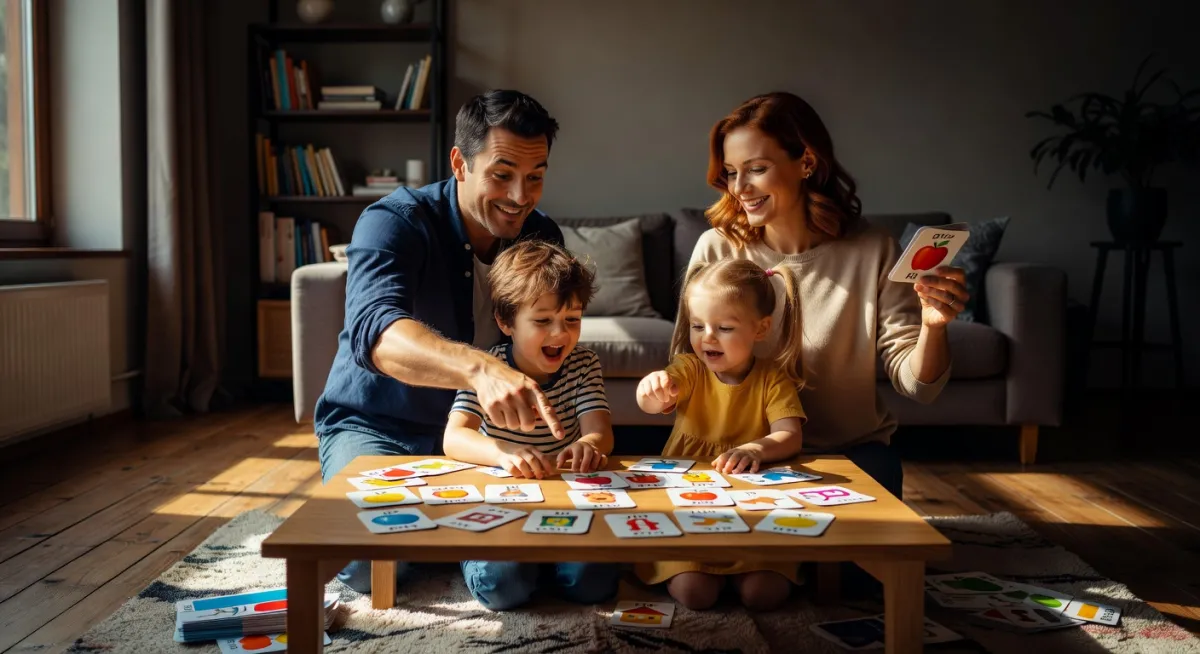
Don't predict what a child will want based on gender. Offer a wide range of materials — building sets, art supplies, dramatic play props, puzzles, outdoor equipment — and observe what the child engages with when all options are present and equally accessible. Children often surprise adults when the social pressure is removed.
Watch Your Own Responses
Children read adult reactions closely. A moment of surprise when a boy gravitates to a nurturing toy, or a hesitation when a girl picks up a set of gears, is enough to register as social information. Neutrality — or better, genuine encouragement — sends a different message.
Address Peer Dynamics Directly
In group settings, naming the dynamic explicitly helps. Letting children know that all toys are for all children — and that teasing someone about their play choice is not acceptable — gives children permission structures that reduce the conformity pressure. This is especially important in the preschool years when peer enforcement begins to intensify.
Ensure Both Spatial and Social Play Have High Status
Spatial and constructive play shouldn't be positioned as remedial for girls or as a corrective. It should simply be a valued, normal part of what everyone does. The same applies to nurturing and imaginative social play for boys. The goal isn't to redirect children away from what they enjoy, but to ensure no child has pre-emptively closed themselves off from an entire category of experience before they've genuinely tried it.
A Note on Biology
This is not a claim that biology plays no role in child development, or that boys and girls are identical in every respect. Developmental science is more nuanced than that. But when researchers control for play history, social exposure, and parental attitudes, biological sex accounts for far less of the variance in toy preference and cognitive outcome than popular assumption suggests. The observed differences are real; their origins are largely social. That distinction matters enormously, because social factors can be changed in ways that biological ones cannot.
The Bigger Picture
Gender-typed toy preferences don't just constrain what children play with for a few years. They help establish cognitive habits, skill profiles, and self-concepts that follow children into adolescence and adulthood. The underrepresentation of women in engineering and the physical sciences, and the underrepresentation of men in caregiving and early education, don't spring from nowhere. They are partly built, brick by brick, in the playrooms and toy aisles of early childhood.
The encouraging implication of the social learning research is the same as its sobering one: these patterns are made by people, in specific environments, through specific choices. Which means they can also be unmade — or at least, significantly broadened — through different choices. What children play with is not a trivial matter. It is, quite literally, how they build their minds.
Sources
Every factual claim in this article was independently verified against the following sources: