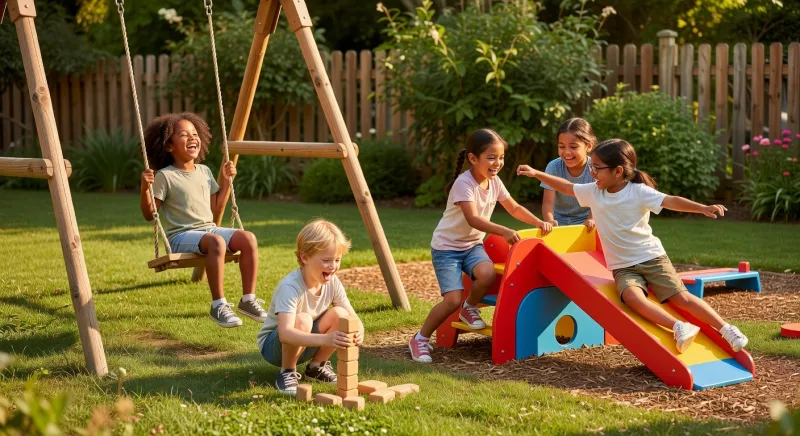
Watch a four-year-old stamp her foot because her tower fell down, then pivot thirty seconds later to carefully rebuild it with a look of fierce concentration. What just happened? Not a tantrum followed by recovery — but a miniature lesson in emotional regulation, conducted entirely through play. Children don't process feelings the way adults do, through reflection and language. They process them through action, imagination, and the body. And the specific type of play they engage in isn't interchangeable — dramatic play, art-making, and physical rough-and-tumble each exercise a distinct emotional circuit in the developing brain.
Why Play Is the Brain's Emotional Classroom
The brain regions responsible for emotional regulation — particularly the prefrontal cortex and its connections to the limbic system — are among the slowest to mature. Full development doesn't complete until the mid-twenties. A young child, then, is working with underdeveloped hardware. They feel intensely but lack the neural wiring to manage those feelings automatically. Play is how the brain builds that wiring.
This isn't metaphor. Every time a child engages in self-directed play, they are practicing the shift between emotional arousal and calm, between impulse and control, between their internal world and the social one around them. The key word is practice. Just as a muscle grows through repeated stress and recovery, emotional regulation strengthens through repeated cycles of feeling and managing feelings — precisely what different forms of play provide.

As an Amazon Associate, I earn from qualifying purchases.
Critically, not all play trains the same capacity. The structure of each play type maps onto a different dimension of emotional development. Understanding which is which helps parents see what's actually happening on the carpet, at the easel, or in the backyard tumble.
Dramatic Play: The Training Ground for Emotional Perspective-Taking
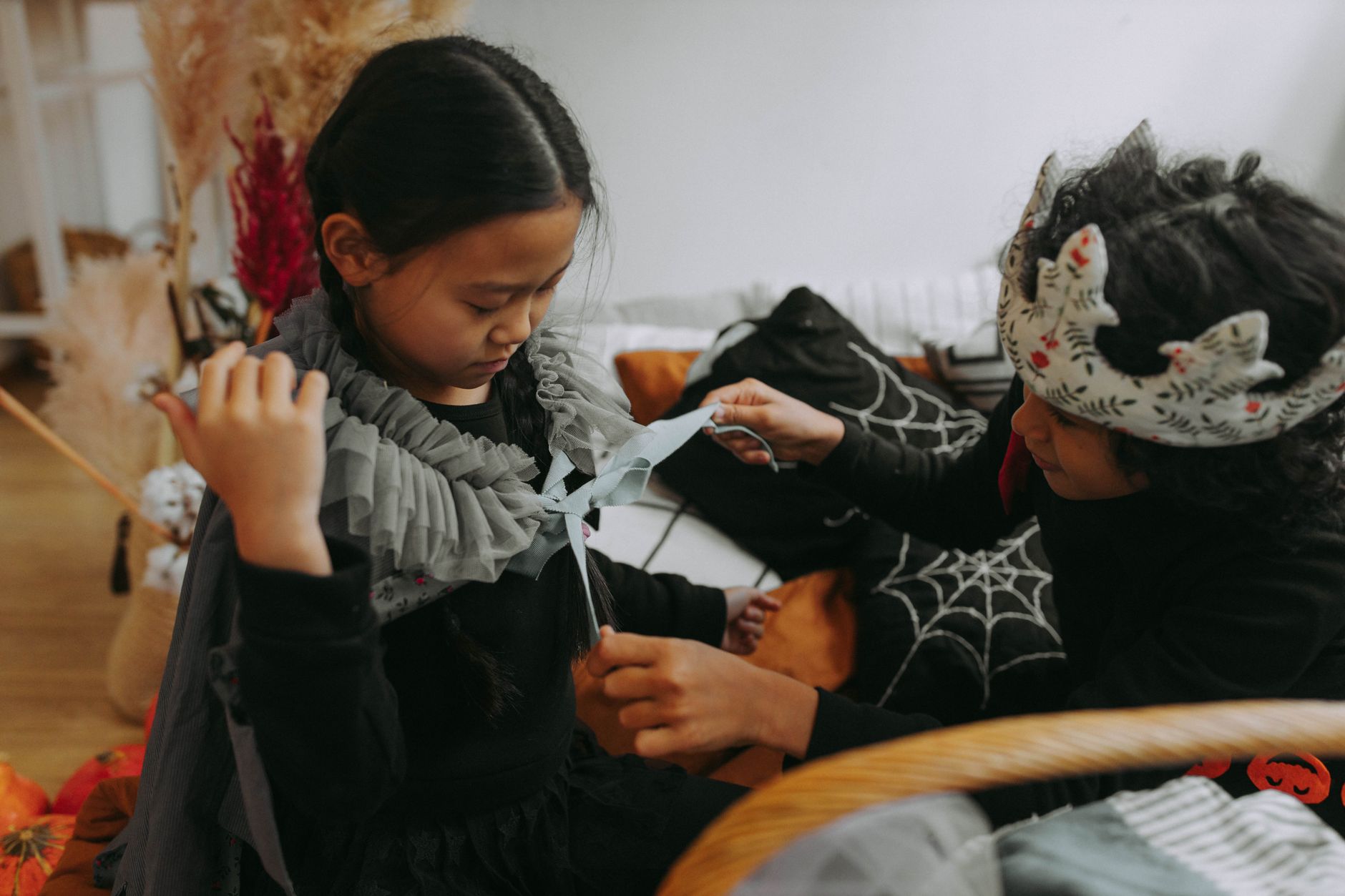
When a child picks up a toy and gives it a voice, or drapes a cape over their shoulders and becomes someone else, they are doing something neurologically sophisticated. Dramatic or pretend play requires a child to hold two realities simultaneously: I am me, and I am also this character. This dual awareness is the cognitive foundation of empathy.
Psychologists call this capacity "theory of mind" — the understanding that other people have inner lives, beliefs, and feelings different from your own. It typically emerges between ages three and five, and pretend play is one of its primary engines. When a child plays out a scene where one character is frightened and another is comforting, they are not just imitating something they've seen. They are simulating fear and comfort from the inside, building emotional categories that will help them recognize those states in real life.
Dramatic play also allows children to approach frightening or confusing emotions at a safe distance. A child who is anxious about a new sibling might repeatedly play out scenarios where a baby doll is neglected, then rescued. This isn't cause for alarm — it's adaptive processing. The play frame creates what developmental psychologists call a "protective fiction": the emotion is real, the stakes are not. This distance gives the child enough safety to feel and examine something that would otherwise be overwhelming.
As an Amazon Associate, we earn from qualifying purchases.
Pretend play sets that open-ended scenarios — kitchens, doctor kits, small world figures — are particularly effective here precisely because they don't prescribe a narrative. The child authors the story, which means the child chooses the emotional terrain they're ready to explore.
What Parents Can Do
Resist directing dramatic play. Your role is to follow the child's lead, occasionally introducing a gentle complication ("Oh no, the baby is crying — what should we do?") that invites them to practice emotional problem-solving. Narrating feelings of characters without judgment — "It looks like the bear is really sad" — gives children emotional vocabulary without interrupting the flow of their processing.
Art-Making: Externalizing the Internal
Art occupies a unique place in emotional development because it turns something invisible — an inner state — into something visible and therefore manageable. Before children have reliable language for complex emotions, they have color, line, pressure, and texture. The furious scribbling with a red crayon may communicate something a three-year-old simply cannot yet say.
The process, not the product, is what matters developmentally. When a child smears paint, pounds clay, or covers a page in overlapping marks, they are externalizing arousal. The physical act of making — the pressure of a brush, the resistance of clay — engages the sensorimotor system and has a naturally regulating effect on the nervous system. It's one reason occupational therapists often use art-based activities with children who have difficulty with emotional dysregulation.
Art-making also builds what researchers call "affect labeling" — the ability to attach words to feelings. When a parent asks "What were you feeling when you made this?" and the child has the painting in front of them as a reference point, the emotional memory becomes easier to access and name. Over time, this naming practice directly strengthens the prefrontal cortex's ability to modulate the amygdala's emotional responses — a connection that neuroscientist Matthew Lieberman's work has documented, though its full implications for child development continue to be explored.
Structure Versus Freedom in Art
Both structured art activities (following steps to make a specific thing) and free art serve emotional development, but in different ways. Free art builds expressive capacity and emotional externalization. Structured art builds frustration tolerance, impulse control, and the satisfaction of deferred reward — the ability to push through difficulty toward a goal. Both are worth providing regularly.
Rough-and-Tumble Play: Wiring the Social-Emotional Body
Of the three play types, rough-and-tumble may be the most misunderstood — and the most defensively curtailed by well-meaning adults. Wrestling, chasing, pillow fights, and physical play that looks like aggression is, in most cases, something entirely different: a fundamental form of social and emotional learning.
Research by neuroscientist Jaak Panksepp identified rough-and-tumble play as activating distinct neural circuits in the brain's subcortical regions associated with social bonding and emotional regulation in mammalian young. This matters because it means rough-and-tumble isn't simply a behavior children happen to enjoy — it engages deeply conserved biological machinery. The circuits it activates are old, shared across mammals, and specifically tied to learning how to be in relationship with other bodies.
What emotional skills does this train? Several, operating in parallel. First, it teaches children to read physical and emotional cues in real time. Is this still fun for both of us? Is this person signaling "stop"? The feedback loop is immediate and embodied — a level of social-emotional learning that verbal instruction simply cannot replicate. Second, it practices modulating arousal: getting intensely activated and then, when the play ends, returning to calm. This arousal-recovery cycle is the physiological core of emotional regulation. Third, it builds frustration tolerance and rudimentary conflict resolution — what happens when someone plays too rough, when someone wants to stop, when roles need to be renegotiated.
Critically, Panksepp's work showed that this type of play is not incidentally enjoyable — it is intrinsically motivating at a neurological level. Children who are deprived of rough-and-tumble opportunities don't simply miss out on fun. They miss structured practice in a core set of social-emotional skills.
The Difference Between Rough-and-Tumble and Aggression
Parents and caregivers learn to distinguish these through attention to affect. In genuine rough-and-tumble, both children typically return to play after brief disruptions, show positive facial expressions even during intensity, and voluntarily re-engage. In genuine aggression, one child is distressed, attempts to leave, or is not participating willingly. The distinction matters both for intervention and for allowing beneficial play to continue.
The Overlap: What All Play Has in Common
Across all three types, the emotional training mechanism shares a common structure: arousal, navigation, and return to baseline. Whether a child is playing out a frightening scenario with dolls, getting frustrated with a painting that isn't working, or getting their heart rate up in a chase game, they are repeatedly cycling through emotional activation and recovery. Each cycle is a small repetition of a skill that, over thousands of iterations across childhood, becomes the capacity adults call emotional resilience.
The other common element is autonomy. Play that a child initiates and controls is not the same, developmentally, as directed activity. Self-directed play requires the child to make emotional choices — how long to persist, when to stop, how to respond to setbacks — that externally structured activities don't demand in the same way. This is why unstructured free play time remains important even as children's schedules fill with organized activities.
Age Matters: How Emotional Play Develops
The relative importance of these three play types shifts across development. Very young children — toddlers especially — are primarily working through sensory and physical play, which lays the regulatory groundwork for everything else. The arousal-calming cycle of physical play at this age is foundational. Rough-and-tumble in its early forms appears in the toddler years and becomes more socially complex through middle childhood.
Dramatic play typically peaks in intensity between ages three and six, though it continues to evolve — becoming more narrative, more socially coordinated, and more emotionally sophisticated as children develop. Art-making as emotional processing can begin with toddlers (early mark-making is already meaningful) and deepens as children gain more fine motor control and more emotional vocabulary to bring to the work.
By school age, children are increasingly capable of using play metacognitively — they begin to recognize their own emotional states during play, talk about them, and even deliberately use play as a coping strategy. This is a significant developmental milestone, and it is built on years of less conscious practice.
What This Means for Adults Who Care for Children
The developmental science of emotional regulation through play carries some practical implications that are worth sitting with.
Don't rush children out of difficult emotions during play. When a child is playing out something upsetting, the instinct to redirect or cheer them up is understandable, but it may interrupt the processing the child is doing. Staying present, staying calm, and letting the narrative run its course is often more useful.
Protect time for all three types. If a child's day is structured primarily around academic activities and screen time, they may be missing the specific emotional training that dramatic play, art, and physical play provide. None of these need to be expensive or elaborate — a cardboard box, a set of crayons, and a willing adult to tumble with will do.
Your own nervous system matters. Children co-regulate before they self-regulate — meaning they depend on the calm presence of an adult to help their own nervous systems settle. The most sophisticated play environment can't substitute for an adult who can stay regulated when a child is not. This is, in the end, the original scaffold on which all emotional learning is built.
Play is not a break from learning. For a developing child, it is the most important learning happening — and nowhere more so than in the emotional realm that will shape every relationship, decision, and challenge they face across a lifetime.
Sources
Every factual claim in this article was independently verified against the following sources: