
For parents, caregivers, and educators seeking versatile and engaging children toys, the question often arises: are Lego and Duplo compatible? These iconic building sets from the same brand hold a special place in fostering creativity and learning. Both lines offer endless opportunities for educational play. This article dives deep into their compatibility, helping adults make informed choices for kids development.
- Understand that Lego and Duplo are partially compatible due to shared design features.
- Know that Duplo bricks are larger, designed for younger children, while Lego suits older kids.
- Combine them using baseplates or by stacking Duplo on Lego, but not vice versa.
- Use mixed sets to bridge age gaps during family playtime or classroom activities.
- Focus on safety by keeping small Lego pieces away from toddlers.
- Explore sets from both lines to enhance motor skills and creativity.
- Check product descriptions to ensure age-appropriate selections for children.
Understanding Lego and Duplo: A Foundation for Play
Lego and Duplo, both created by the same renowned toy company, are staples in the world of children toys. Lego sets, known for intricate designs, target older children with smaller, detailed pieces. These sets encourage problem-solving and fine motor skills. Parents often see Lego as a step up for kids ready for complex builds.
Duplo, on the other hand, caters to younger children, typically aged 1 to 5. Its larger bricks reduce choking hazards and are easier for small hands to grip. This makes Duplo a go-to for caregivers introducing building concepts. Educators also favor Duplo for preschool settings due to its safety focus.
Both lines share a similar stud-and-tube system for connecting bricks. This design overlap sparks curiosity about whether they can work together. For parents, knowing this connection can maximize toy value. It also helps in planning play that grows with a child.
Understanding these basics aids in selecting the right sets for kids development. Caregivers can mix play experiences to suit different ages. This category of toys, filed under Lego and Duplo, directly addresses such practical needs. Resources from NAEYC highlight the importance of age-appropriate play tools.
Are Lego and Duplo Compatible? The Technical Breakdown
So, are Lego and Duplo compatible in a literal sense? The answer is yes, but with limitations. Duplo bricks can stack on top of Lego bricks due to their shared connection system. However, Lego pieces cannot securely attach on top of Duplo due to size differences.
Duplo bricks are roughly twice the size of standard Lego bricks in all dimensions. This scaling ensures safety for younger kids but restricts full integration. Parents might notice that while Duplo can form a base, Lego structures on top may not align perfectly. This partial compatibility still offers creative options.
For educators using these toys in group settings, combining them can work for mixed-age activities. A base of Duplo can support Lego towers built by older children. Caregivers should monitor to ensure small Lego parts stay with appropriate age groups. Safety remains a priority during mixed play.
This compatibility aspect ties directly to the Lego and Duplo category focus. It helps adults plan engaging sessions that cater to varied skill levels. Exploring sets in building and construction toys can offer more ideas. Such play fosters teamwork and imagination across ages.
Benefits of Combining Lego and Duplo for Kids Development
Combining Lego and Duplo offers unique advantages for kids development. These children toys, when used together, bridge developmental stages. Younger kids can handle Duplo while older siblings use Lego. Parents find this mix encourages family bonding through shared play.
Educators note that mixed sets promote collaborative learning in classrooms. Children of different ages can contribute to a single project. This setup teaches patience and communication skills. It also allows teachers to tailor tasks to individual abilities.
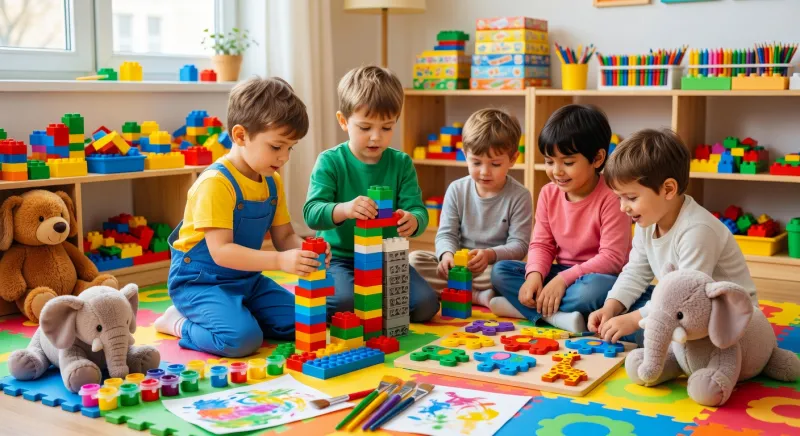
For caregivers, using both lines together maximizes toy longevity. A Duplo base can evolve into complex Lego creations as kids grow. This adaptability saves money and storage space. It also keeps play exciting over time.
Experts from Zero to Three stress the value of versatile play in early learning. Are Lego and Duplo compatible enough to support this? Partially, yes, and this category focus helps adults leverage that potential. Such integration supports motor skills and creativity in young builders.
Practical Tips for Parents and Educators Using Both Sets
For parents wondering if are Lego and Duplo compatible in daily play, practical strategies can help. Start by using Duplo as a sturdy base for structures. Older children can add Lego details on top. This method ensures stability and engages multiple age groups.
Caregivers should store Lego and Duplo separately to avoid confusion. Use labeled bins to keep small Lego pieces away from toddlers. This prevents safety risks during playtime. It also helps kids learn organization skills early on.
Educators can create themed projects combining both sets for classroom use. Think of building a city where Duplo forms large buildings and Lego adds smaller features. Such activities encourage teamwork among students. They also spark imagination in a structured way.
Lastly, explore resources in educational toys for more ideas on integrating play. Are Lego and Duplo compatible for learning goals? Yes, with guided supervision. These tips ensure safe, enriching experiences for children.
Challenges to Consider When Mixing Lego and Duplo
While the question of are Lego and Duplo compatible has a positive answer, challenges exist. The primary issue is the size difference affecting structural integrity. Duplo on Lego works, but the reverse often fails. Parents must manage expectations during play.
Another concern is safety for younger children in mixed settings. Lego pieces pose choking hazards for toddlers accustomed to Duplo. Caregivers need to supervise closely during combined play. This ensures no small parts are within reach of little hands.
Educators might find uneven skill levels a hurdle in group activities. Older kids may dominate builds, leaving younger ones frustrated. Balancing participation requires careful planning. Teachers should assign roles based on ability to keep everyone engaged.
Despite these challenges, the Lego and Duplo category offers solutions through guided use. Adults can turn limitations into learning moments. Discussing size and safety teaches kids about problem-solving. This reinforces the value of these toys in development.
Frequently Asked Questions
Can Lego bricks fit on top of Duplo bricks?
No, Lego bricks cannot securely fit on top of Duplo bricks due to size differences. Duplo pieces are much larger, designed for younger children. Lego bricks can, however, be stacked under Duplo in some cases. Parents should guide kids to build stable structures using Duplo as a base. Educators can use this limitation to teach about design constraints. Supervision ensures safety with mixed sets.
Are Lego and Duplo compatible for all ages?
Partially, yes, are Lego and Duplo compatible, but not universally for all ages. Duplo suits children aged 1 to 5 due to larger, safer pieces. Lego targets older kids with smaller, intricate parts. Caregivers must separate small pieces to protect toddlers. Educators can mix them in controlled settings for group play. Age-appropriate supervision is key to safe use.
Is it safe to mix Lego and Duplo during playtime?
Mixing these sets can be safe with proper precautions. Small Lego parts are risky for younger kids who might swallow them. Parents should keep sets separated by age group when not supervised. Using Duplo as a base reduces risks during joint builds. Caregivers must stay vigilant to ensure safety. Clear storage helps avoid accidental mixing.
How can I use both toy lines for family play?
Using both toy lines together works well for family play with some planning. Start with a Duplo foundation for younger siblings to contribute. Older kids can add Lego details to enhance the build. Parents should oversee to keep small pieces away from toddlers. This approach fosters teamwork across ages. It also maximizes the value of both sets.
What are the benefits of combining these building toys?
Combining these building sets offers several developmental benefits for children. It bridges age gaps, allowing siblings or classmates to play together. Younger kids handle larger pieces while older ones tackle detailed work. This setup encourages communication and shared creativity. Educators find it useful for inclusive classroom projects. Overall, it enriches playtime with varied learning opportunities.
Final Thoughts
Exploring whether are Lego and Duplo compatible reveals a world of opportunity for parents, caregivers, and educators. These children toys, though different in size and target age, can work together in limited but creative ways. By understanding their partial compatibility, adults can craft engaging play experiences that support kids development across stages.
The key lies in strategic use and supervision to ensure safety and inclusivity. From family playtime to classroom projects, combining these sets fosters creativity and teamwork. Dive into more ideas by exploring building and construction toys for additional inspiration.
Take action today by assessing your toy collection. Mix Lego and Duplo thoughtfully to enrich educational play. This approach not only maximizes value but also nurtures growth in young minds.